How Packaging Is Shaping The Food Industry So Far In 2026
Discover how, in 2026, packaging innovations are driving safety, reducing waste, and building consumer confidence in the evolving food industry.
HART Insight Summary
Packaging is increasingly becoming a strategic component of food production and retail as consumer expectations around safety, convenience, sustainability, and product presentation continue to rise. Increasing demand for prepared and ready-to-eat foods is placing greater performance requirements on packaging systems, from temperature resilience to transport durability. At the same time, packaging now acts as a visible indicator of product integrity and brand trust at the point of purchase. For food manufacturers, these pressures are reshaping how packaging decisions influence operational efficiency, product quality, and long-term brand perception. As the food industry moves toward 2026, packaging is increasingly viewed not just as containment, but as a functional and strategic part of the product system.
Key Takeaways
- Packaging plays a growing role in shaping consumer trust and purchase decisions at the retail shelf.
- Prepared and heat-and-eat foods require packaging that performs across transport, storage, and reheating conditions.
- Poor packaging integrity can lead to lost sales, product waste, and increased consumer hesitation.
- Visual clarity and structural durability influence perceived product quality and value.
- Sustainability expectations are increasing pressure on manufacturers to balance material responsibility with performance and food safety.
At A Glance
Estimated Reading Time: 5 minutes
Original Publish Date: January 2026
Source: Packaging Digest
As 2026 approaches, there are a lot of resolutions hanging in the balance — from weight loss to clean eating to even being nice to that annoying cousin at family functions (you know the one). But in the food business, this year demands a closer look at our packaging choices. It’s one of the most powerful and visible indicators of trust in the industry, not just claims.
Long before a consumer tastes a product, they evaluate it through the lens of its container. Inline Plastics knows that in an environment shaped by prepared foods, grab-and-go meals, social-media reviews (biased much?), and heat-and-eat options, packaging now serves as the first proof point that a brand takes safety, quality, and reliability seriously.
Consumer & Financial Impacts Of Packaging Decisions
This shift is not driven by aesthetics alone. It reflects more fundamental changes in how food is purchased, handled, and consumed. Prepared foods are no longer occasional conveniences; they are a routine part of daily life, and quite frankly, the way people who balance work/life/Instagram updates operate today. Consumers expect meals that can be transported, stored, and sometimes reheated, without compromising safety or quality. As a result, packaging must perform across a broader range of conditions and over a longer lifecycle than ever before.
Trust, once built primarily through brand reputation, is increasingly established in seconds at the shelf. Shoppers notice whether a package looks intact, secure, professionally constructed, or makes the product look Insta-worthy. Any sign of weakness, be it a loose lid, cloudy material, or unclear closure, can create hesitation. In those moments, consumers rarely stop to investigate. They move on.
Food-safety expectations have also evolved. Shoppers are more aware of handling risks and more cautious about prepared foods that appear vulnerable. Visible protection has become a baseline expectation rather than a bonus feature. When packaging clearly communicates that food has been protected from preparation through purchase, it reduces uncertainty. When it doesn’t, it introduces doubt that no label or claim can overcome, also…well…it can look kind of gross.
For food retailers and operators, that doubt carries real consequences. Packages passed over on shelves can cause shrinkage due to spoilage and, in turn, lost sales and profit erosion. Questionable packaging increases the likelihood of complaints and waste.
Packaging’s Role In Brand Perception & Safety
According to the Multidisciplinary Digital Publishing Institute (MDPI), in the event of a food-safety concern, packaging is often part of the review, shaping how responsibly a brand is perceived to operate. Packaging that visibly reinforces integrity helps reduce risk before problems ever arise.
At the same time, convenience has expanded beyond cold, ready-to-eat items. Heat-and-eat meals and take-home options are becoming more common, raising the bar for packaging performance. Containers must withstand hot fill, temperature fluctuations, transport, and reheating. Just as importantly, they must do so without adding labor or operational complexity in environments already under pressure. Let’s just try to keep everything easier, for the sake of everyone’s sanity.
Presentation remains equally critical, particularly as portion sizes shrink and purchasing becomes more intentional. While consumers remain price-conscious, indulgent items such as desserts, sides, and premium prepared foods continue to play an important role in assortments. These products rely heavily on visual appeal to justify their value, especially in refrigerated cases where decisions are made quickly.
Smaller portions leave little margin for error. Scratches, haze, or flimsy construction can undermine perceived quality instantly, regardless of how good the food itself may be. Clear, rigid packaging that maintains its shape and showcases the product supports impulse purchases and protects margin. In many cases, it directly influences whether a product feels worth the price. Would you ever purchase an ugly-looking sandwich in packaging that looks like a plastic bag? Didn’t think so.
Intensifying Demand For Sustainable Packaging
Layered onto all of this is rising pressure around sustainability. Yes, it continues to get even more complicated. Consumers, retailers, and brand owners are looking beyond broad claims toward measurable progress. Packaging is increasingly evaluated for how responsibly materials are sourced and used, without compromising food safety, shelf life, or performance.
This creates a complex challenge. Sustainable choices must still meet demanding operational requirements. Packaging that fails prematurely creates waste, undermining environmental goals while increasing cost. The focus heading into 2026 is shifting toward solutions that balance circularity, durability, and clarity, recognizing that sustainability and functionality must work together to be effective.
Taken together, these forces place packaging at the intersection of safety, efficiency, sustainability, and brand trust. Decisions made at the container level influence labor demands, shrink, regulatory readiness, and consistency across locations. Packaging is no longer a background decision; it is a strategic one. Seriously!
The brands that succeed in 2026 and beyond will be those that view packaging as an active part of their business strategy rather than a commodity. They will choose solutions that quietly reduce risk, reinforce confidence, and support evolving consumer expectations without adding friction to operations.
Because in today’s food landscape, packaging doesn’t just support the product. It plays a critical role in protecting the brand, the customer experience, and the business itself.
HART Perspective
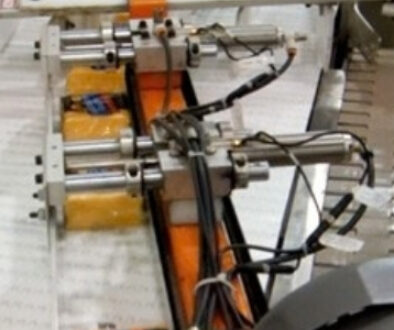
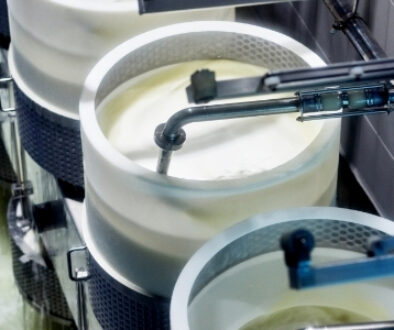
While the article focuses on retail and consumer perspectives, the implications extend upstream into dairy and cheese processing. Packaging decisions influence production flow, sanitation requirements, product handling, and shelf stability. As cheese processors expand into prepared foods, shredded formats, snack packs, and ready-to-eat offerings, packaging performance must match the consistency, moisture control, and structural integrity achieved during processing. Systems that maintain uniform product structure, moisture levels, and temperature control during production help ensure that packaging can perform as intended through distribution and retail display.
What This Means For Dairy & Cheese Processors
- Packaging performance is increasingly tied to product consistency, moisture control, and structural integrity during processing.
- Growth in prepared foods and snack formats may increase demand for precise forming, cutting, and portioning systems.
- Packaging failures can amplify production variability, making consistent upstream processing more critical.
- Sustainable packaging initiatives may influence how processors manage shelf life, waste streams, and product protection.
Attribution
This article references industry reporting and data originally published by Packaging Digest. HART Design & Manufacturing has added independent analysis and dairy-processing context. The original publishers did not contribute to or review these additions.
Keep Up To Date On Cheese Industry News
Find all of HART Design & Manufacturing’s current industry news here.