
How New Packaging Requirements Are Changing Food Processing Equipment
Packaging requirements are changing, and the effects extend well beyond the materials used to protect food products.
As manufacturers explore lighter materials, recyclable alternatives and new package formats, they’re also evaluating how those changes affect existing production equipment. A package that meets sustainability goals still needs to move reliably through conveyors, automated loading systems and downstream handling operations.
Recent research from PMMI, The Association for Packaging and Processing Technologies, highlights a growing challenge for food manufacturers: packaging innovation is moving forward, but existing machinery isn’t always designed to accommodate the changes.
For food and dairy processors, understanding how packaging decisions affect equipment performance is becoming an increasingly important part of production planning.
Sustainability Goals and EPR Regulations Are Changing Equipment Requirements
In June 2026, PMMI released The Ripple Effect: CPG Sustainability and the New OEM Spec Sheet, a report examining how sustainability initiatives are changing expectations for packaging and processing equipment manufacturers.
According to the report, 55% of surveyed end users reported that packaging machinery limitations were creating challenges in achieving sustainability goals. Meanwhile, 82% of surveyed equipment manufacturers indicated that early visibility into customers’ sustainability initiatives was important for equipment design planning.
The research identified several packaging trends influencing equipment requirements, including lightweighting, increased use of post-consumer recycled materials, smaller package sizes and the elimination of certain secondary packaging components.
Extended Producer Responsibility (EPR) regulations are adding another consideration. These policies generally place greater responsibility on producers for managing the environmental impacts and costs associated with packaging after consumer use.
Requirements vary by jurisdiction, but they can influence decisions about packaging materials, recyclability and package design. For food manufacturers distributing products across multiple markets, those differences may affect packaging specifications and future equipment investments.
An October 2026 article in Dairy Processing also highlighted how EPR regulations are influencing packaging decisions and increasing interest in equipment capable of handling different materials.
These developments are bringing packaging development, engineering, operations and equipment suppliers into closer collaboration. Decisions that once centered primarily on package design increasingly require consideration of how new materials and formats will perform throughout production.
For equipment suppliers and manufacturers alike, these changes reinforce the importance of evaluating packaging, product handling and automation requirements as part of a single system rather than as separate decisions.
Changing Packaging Materials Can Affect Equipment Performance
Packaging materials have physical characteristics that influence how they perform during manufacturing.
Film thickness, stiffness, surface friction, sealability and dimensional stability can all affect how a material moves through equipment. When those characteristics change, a packaging line that performs reliably with one material may require adjustments to accommodate another.
Lightweighting provides a useful example. Reducing the amount of material used in a package can support sustainability objectives, but thinner materials may be more susceptible to stretching, wrinkling or deformation, depending on the application.
For equipment that forms, seals or wraps packages, these differences can influence tension control, material tracking and sealing conditions.
Once the product is packaged, material characteristics can also affect downstream operations. A lighter or less rigid package may respond differently when transferred between conveyors, accumulated, diverted or picked up by automated handling equipment.
Changes in package dimensions or surface characteristics can introduce additional considerations, particularly when equipment relies on consistent product spacing, orientation or positioning.
Some material changes can be accommodated with relatively minor adjustments. Others may require new tooling, additional testing or modifications to existing equipment.
The key consideration is whether the revised packaging can perform consistently under actual production conditions, not simply whether it meets the desired material specifications.
What Packaging Changes Mean for Conveying and Automated Product Handling
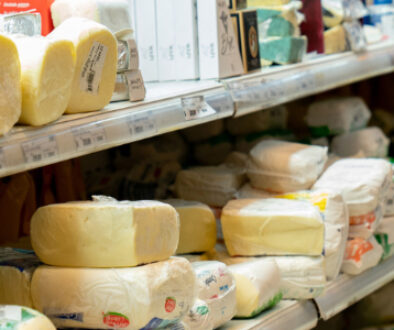
For cheese and dairy manufacturers, packaged products often pass through several connected operations before reaching their final destination.
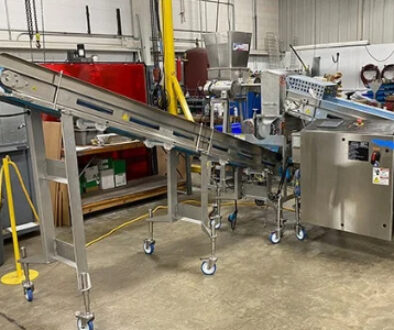
Depending on the application, these may include conveying, diverting, robotic product handling, automated loading and case packing. Changes in packaging materials or formats can affect each of these operations differently.
A rigid package, for example, may maintain its shape consistently as it moves through a conveyor system. A flexible package can respond differently to acceleration, contact with guides or pressure from adjacent products.
Changes in package dimensions can also affect lane configurations, product spacing and the way automated equipment positions or transfers products.
For robotic product handling applications, package characteristics may influence end-of-arm tooling and pickup methods. A gripper or vacuum system developed for one package may need to be evaluated when its material, surface or rigidity changes.
Case packing introduces another set of considerations. Changes in package shape, stability or dimensions can influence how products are oriented, grouped and placed into cases.
These differences don’t necessarily require entirely new equipment. However, they can affect whether an existing system can accommodate a revised package while maintaining the required production performance.
For manufacturers planning packaging changes, evaluating downstream product handling early can help identify where adjustments may be necessary.
Reducing Secondary Packaging Can Change How Products Are Handled
Not every sustainability initiative involves replacing one packaging material with another. Some manufacturers are exploring opportunities to reduce or eliminate secondary packaging, including certain wraps, trays and other components used to group or protect products.
While these changes may reduce material consumption, secondary packaging can also provide stability during manufacturing and distribution.
A tray, for example, may help keep a group of products organized as they move through conveying or case packing operations. Removing it could change how products are accumulated, transferred or loaded.
Similarly, reducing the rigidity of an outer package may affect how it responds to stacking or handling forces.
For equipment designers, the challenge is determining whether the revised package configuration provides sufficient stability for the operations it must pass through.
Depending on the application, this may involve evaluating conveyor transitions, product orientation, grouping methods or automated pickup and placement.
Alternative handling methods may help accommodate certain packaging changes. In other situations, maintaining specific packaging components may remain necessary to protect the product or support reliable operation.
Evaluating these requirements during packaging development can help manufacturers understand the practical implications of reducing material before implementing changes on the production floor.
Why Production Testing Matters When Introducing New Packaging
A new packaging material or format may perform well during initial evaluation but behave differently when introduced into full-scale production.
Operating speeds, product accumulation, equipment transitions and extended production runs can reveal handling challenges that aren’t always apparent during smaller trials.
Testing under representative production conditions helps manufacturers determine whether a revised package can move reliably through the complete process.
Depending on the application, important considerations may include:
- Conveying and transfers: Does the package remain stable as it moves between equipment?
- Product spacing and orientation: Can the system consistently position products for downstream operations?
- Automated loading: Can existing tooling reliably handle the revised package?
- Case packing: Does the new format maintain the arrangement and stability required for loading?
- Production performance: Can the equipment maintain acceptable operation at the required throughput?
These evaluations are particularly important when several machines are connected.
A revised package may perform successfully through its primary packaging operation but create difficulties during accumulation, product transfers or automated loading farther downstream.
Testing the complete product path can help identify where adjustments are needed and provide equipment suppliers with information about the materials, package characteristics and production conditions involved.
Early Collaboration Can Help Prevent Equipment Compatibility Issues
One of the important findings from PMMI’s 2026 sustainability research is the value of communication between food manufacturers and their equipment suppliers.
The earlier equipment manufacturers understand an anticipated packaging change, the better positioned they are to evaluate its potential impact on existing systems or future equipment designs.
This becomes especially important when manufacturers are considering materials or formats that differ substantially from those currently in production.
For example, a cheese manufacturer evaluating a new package with different rigidity or dimensions may benefit from involving equipment engineers before the packaging design is finalized. That discussion can help determine whether existing conveyors, automated loading systems or case packing equipment will require modifications.
Waiting until the new packaging has been selected may limit the available options or introduce additional costs.
PMMI’s research also points to increased interest in modular equipment and systems that can be adjusted or upgraded as packaging requirements evolve. However, the value of those capabilities depends on the specific application and the types of changes a manufacturer expects to make.
For custom equipment applications, early collaboration is particularly valuable because the equipment design can be developed around the product, packaging configuration and production requirements.
Understanding those requirements from the beginning can help manufacturers make more informed decisions about equipment modifications, tooling and future investments.
Preparing Food Processing Equipment for Changing Packaging Requirements
Sustainability initiatives and evolving packaging regulations are introducing new considerations for food and dairy manufacturers.
The changes may begin with packaging materials, but their effects can extend into conveying, robotic handling, automated loading, case packing and other downstream operations.
For processors, the question isn’t simply whether a new material meets sustainability objectives or applicable packaging requirements. It’s also whether that material can move through production reliably while maintaining product quality and operational performance.
As packaging requirements continue to evolve, evaluating material characteristics alongside equipment capabilities will remain an important part of successful implementation.
At HART, we understand that packaging changes can affect more than the packaging equipment itself. Our conveying, robotic product handling, automated loading and case packing solutions are designed around the products and production requirements of the manufacturers we serve.
As packaging materials and formats continue to evolve, we’re here to help food and dairy manufacturers evaluate their equipment needs and develop practical solutions.
Explore HART’s equipment capabilities or contact our team to discuss your production requirements.