Why Processing Efficiency Requires A Whole-System Approach
Improving efficiency in a dairy processing plant is rarely as simple as replacing one machine or optimizing one step in production. Equipment, product flow, sanitation, controls, utilities, automation and downstream operations all influence how efficiently a production system performs.
Recent industry reporting on membrane technology provides a useful example. Removing water from dairy streams earlier in production can reduce the amount of product that must move through energy-intensive evaporation and drying. But the true operational impact depends on what happens throughout the rest of the process.
For dairy and cheese processors, this illustrates a larger point: improvements made in one area can create benefits, constraints or new requirements elsewhere. Looking at production as a connected system can help manufacturers identify opportunities that may be missed when individual processes are evaluated in isolation.
Key Takeaways
- Improving one production step does not necessarily improve the efficiency of the entire line.
- Changes upstream can affect production rates, product flow, sanitation requirements and downstream operations.
- Equipment capacity should be evaluated in relation to the processes immediately before and after it.
- Sanitation and CIP requirements are an important part of overall production efficiency.
- Controls and automation can provide greater visibility into how connected processes are performing.
- Existing production systems may offer opportunities for improvement without requiring a complete line replacement.
- A whole-system approach can help processors evaluate which investments may provide the greatest operational benefit.
At A Glance
- Estimated Reading Time: ≈6 minutes
- Topic: Dairy Processing, Production Efficiency and Process Integration
- Industry Focus: Dairy and Cheese Manufacturing
One Efficient Process Does Not Automatically Create An Efficient Plant
Dairy processing facilities are made up of connected operations.
Product moves from one process to another. Equipment needs to operate at compatible rates. Production schedules have to account for sanitation and changeovers. Utilities support multiple processes. Packaging and downstream handling need to keep pace with upstream production.
Because these operations are interconnected, improving one stage can affect several others.
Recent reporting from Dairy Foods on advances in membrane technology for milk concentration provides a good example.
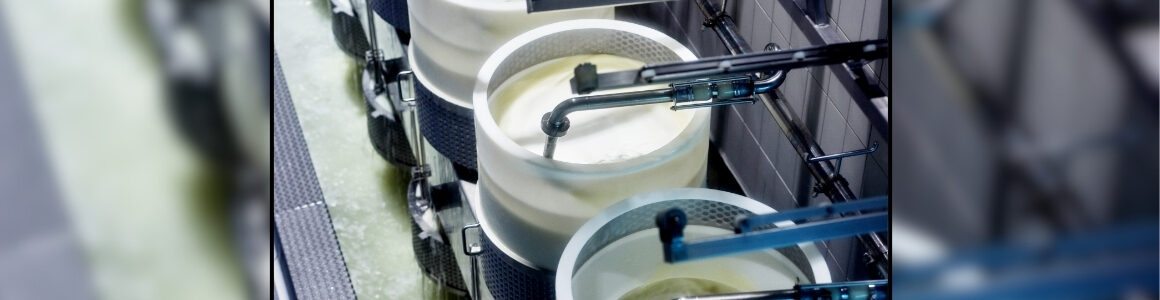
Concentrating milk and other dairy streams requires removing substantial amounts of water. Evaporation and drying can require significant thermal energy, so processors may use membrane technologies to remove some of that water earlier in production.
Reducing the volume sent to an evaporator can lower the demand placed on that downstream process.
But that’s only part of the story.
Changing one stage of production can affect flow rates, equipment utilization, sanitation requirements, process controls and what downstream systems are required to handle.
The larger lesson extends well beyond membrane technology: the value of an individual improvement depends partly on how it affects the complete production system.
Look Upstream And Downstream
When a production constraint appears, the equipment where the problem becomes visible isn’t necessarily the only place worth evaluating.
The cause may be upstream.
Or the solution may create a new constraint downstream.
Consider a production line where one operation is capable of processing product faster than the equipment immediately following it. Increasing the speed of the first process may improve its individual performance, but it won’t necessarily increase total line output.
The downstream operation may simply become the new bottleneck.
The reverse can happen as well. Improving an upstream process may reduce the workload placed on downstream equipment and create benefits elsewhere in production.
This is one reason equipment specifications alone don’t provide a complete picture of production efficiency.
Manufacturers evaluating a process may also need to consider:
- How product enters and exits the operation
- The production rate of upstream and downstream equipment
- Accumulation or product-handling requirements between processes
- Labor needed to move or manage product
- Changeover requirements
- Sanitation and cleaning time
- Packaging and case-packing capacity
- Controls and communication between connected equipment
Understanding those relationships can provide a clearer picture of where an improvement will actually affect overall production.
Bottlenecks Can Move
Solving a production bottleneck is valuable, but processors should also consider what happens after that constraint is removed.
Suppose one piece of equipment limits a line to a particular production rate. Replacing or improving that equipment could create additional capacity.
But if the next stage of production is already operating near its limit, the bottleneck may simply move.
This doesn’t mean the original improvement was unnecessary. It means capacity needs to be considered across the complete process.
Before making an equipment investment, manufacturers may benefit from identifying which operations currently constrain production and which could become constraints if throughput increases.
That can include equipment, but it can also include labor, sanitation, product handling, packaging or available production time.
A whole-line review can help determine whether an improvement addresses the underlying production need or simply transfers the constraint to another part of the process.
Production Efficiency Includes More Than Throughput
Efficiency is often associated with speed, but producing more product per hour is only one measure of performance.
A process can operate quickly while still requiring significant downtime, labor, utilities or cleaning resources.
For dairy and cheese processors, a more complete evaluation may include:
- Throughput: How much finished product can the complete line consistently produce?
- Uptime: How much scheduled production time is actually available for manufacturing?
- Changeovers: How long does it take to transition between products, formats or package configurations?
- Sanitation: How much production time and how many resources are required for cleaning?
- Labor: Where are operators performing repetitive handling or other labor-intensive tasks?
- Product Flow: Does product move smoothly between operations, or are there areas where accumulation, waiting or manual intervention occurs?
- Utilities: How much water, energy or compressed air is required to support production?
Looking at these factors together provides a more realistic view of operational efficiency than focusing on maximum equipment speed alone.
Sanitation Is Part Of Production Efficiency
Sanitation is essential in dairy and food processing, but it is also a significant part of the production schedule.
Cleaning takes time. It uses water, chemicals and energy. Depending on the process, equipment may need to be disassembled, inspected or prepared before production can resume.
That means sanitation decisions can influence overall plant efficiency.
The original Dairy Foods reporting illustrates this particularly well with membrane systems. Cleaning performance affects not only hygienic operation but also production uptime and the ability of the system to return to expected performance after cleaning.
The same broader principle applies throughout a dairy facility.
When evaluating equipment or process changes, manufacturers can consider how the new system will be cleaned, how long sanitation will require and how those requirements fit within the plant’s existing production schedule.
In some applications, equipment accessibility or a more efficient sanitation process may provide operational value even if the equipment’s maximum production rate remains unchanged.
Sanitation should therefore be considered during equipment and system planning rather than treated solely as an activity that happens after production.
Controls Can Help Connect The Process
Modern processing equipment can generate significant amounts of operational information.
The value of that information depends on how effectively it helps operators understand and manage production.
Controls can provide visibility into equipment status, production rates, operating conditions and other information that may help teams identify when a process begins moving outside expected parameters.
That becomes particularly valuable when multiple operations are connected.
If an upstream process slows down, downstream equipment may need to respond. If production stops at one point, operators need to understand how that interruption affects the rest of the line.
Integrated controls can help equipment operate as part of a coordinated production system rather than as a collection of independent machines.
They can also provide useful information when manufacturers investigate recurring production issues.
Instead of only asking where did the line stop?, teams may be able to better understand what happened immediately before the interruption and how conditions changed throughout the process.
Automation Should Address The Process, Not Just The Task
Automation can be an important tool for improving production efficiency, but the best place to automate isn’t always the most obvious one.
A repetitive manual task may appear to be a logical automation opportunity. Before making that investment, however, manufacturers can consider how automating the task would affect the surrounding operations.
Will upstream equipment consistently supply enough product?
Can downstream equipment accept the increased production rate?
Will the automation reduce labor or simply move that labor requirement somewhere else?
Does the automated process need to accommodate multiple products or formats?
How will the equipment be cleaned and maintained?
These questions help shift the conversation from “Can this task be automated?” to “How would automation improve the overall process?”
That distinction can lead to more useful equipment decisions.
Automation works best when it addresses an actual production need and fits into the broader line rather than operating as an isolated improvement.
Product Flow Can Reveal Hidden Inefficiencies
Not every production challenge occurs inside a machine.
How product moves between equipment can also influence efficiency.
Product may need to accumulate between operations running at different speeds. Employees may manually transfer or orient products. Conveyor layouts may create unnecessary movement. Packaging equipment may periodically wait for product, or upstream operations may have to stop because downstream equipment cannot keep pace.
Individually, these interruptions may appear minor.
Across an entire shift or production week, however, they can affect throughput and labor requirements.
Evaluating product flow can help processors identify areas where better integration, conveyance, accumulation or automated handling may improve the complete process.
This is particularly important when new equipment is added to an existing production line.
A new machine may perform its individual task efficiently, but manufacturers also need to determine how product will reach it, how it will leave the machine and how its production rate will coordinate with surrounding equipment.
Existing Production Lines May Have Opportunities For Improvement
Improving efficiency does not always require replacing an entire production line.
Sometimes the most valuable opportunity is more targeted.
A processor might identify one bottleneck that limits an otherwise capable line. Another facility may benefit from improved controls or automated product handling. A change to sanitation procedures or equipment accessibility may increase available production time. Better integration between existing equipment could improve product flow.
The appropriate solution depends on what is actually limiting the operation.
Before beginning a major capital project, processors can evaluate:
- Where production regularly slows or stops
- Which processes require the most manual intervention
- Where product accumulates or waits
- How much time is spent on changeovers and sanitation
- Which equipment is approaching available capacity
- Whether controls provide enough visibility into production
- How effectively individual machines communicate or operate together
- Whether packaging and downstream handling can support increased production
This type of assessment can help manufacturers prioritize investments based on operational needs rather than assuming that the largest equipment project will automatically create the largest efficiency improvement.
Think About The Complete Production System
Efficiency projects often focus on a single process or utility system. However, improvements in one area can affect production rates, sanitation requirements, product flow and downstream operations throughout the plant.
Evaluating these interactions can help processors prioritize investments that deliver broader operational benefits.
The membrane technology developments reported by Dairy Foods provide one example. Removing water earlier in dairy processing can reduce the thermal demand placed on downstream operations. But realizing the broader benefit still requires processors to consider how that change interacts with the rest of production.
The same thinking applies when evaluating cutting, filling, packaging, product handling, automation or other production processes.
Rather than asking only whether a particular machine or technology is more efficient, manufacturers can also ask:
How will this change affect everything around it?
That question can reveal considerations that equipment specifications alone may not show.
What This Means For Dairy & Cheese Plants
Process Integration: Equipment should be evaluated in the context of the operations immediately upstream and downstream.
Bottleneck Management: Increasing capacity at one stage can shift a constraint elsewhere, making whole-line capacity analysis important when planning improvements.
Sanitation: Cleaning requirements affect production time, labor, utilities and equipment availability and should be considered during process planning.
Controls: Greater visibility into connected equipment can help operators understand how production conditions and interruptions move through a line.
Automation: Automation opportunities are most valuable when they address an actual process constraint and support the surrounding operations.
Product Flow: Conveyance, accumulation and handling between machines can influence throughput just as much as the equipment performing the primary process.
Capital Planning: Evaluating the complete production system can help manufacturers prioritize improvements based on their broader operational impact.
Evaluating Your Complete Production Process
Improving a dairy or cheese processing operation starts with understanding how individual processes work together.
At HART, our engineering team works with food and dairy processors to develop standard and customized equipment, automation and integrated production solutions based on specific products, production requirements and existing operations. Projects can range from an individual machine addressing a particular need to equipment designed as part of a larger processing or packaging line.
Contact HART Design & Manufacturing to discuss your production process, equipment needs or opportunities for greater line integration.
Attribution
This article was inspired by recent industry reporting from Dairy Foods examining how membrane technologies can reduce energy demand during milk concentration. That reporting provides the membrane-processing example discussed in this article. HART has used that development as a starting point for a broader discussion of process integration and whole-system production efficiency.
Keep Up To Date On Cheese Industry News
Find all of HART Design & Manufacturing’s current industry news here.